



Lexington Cuts Ribbon on North Main Street
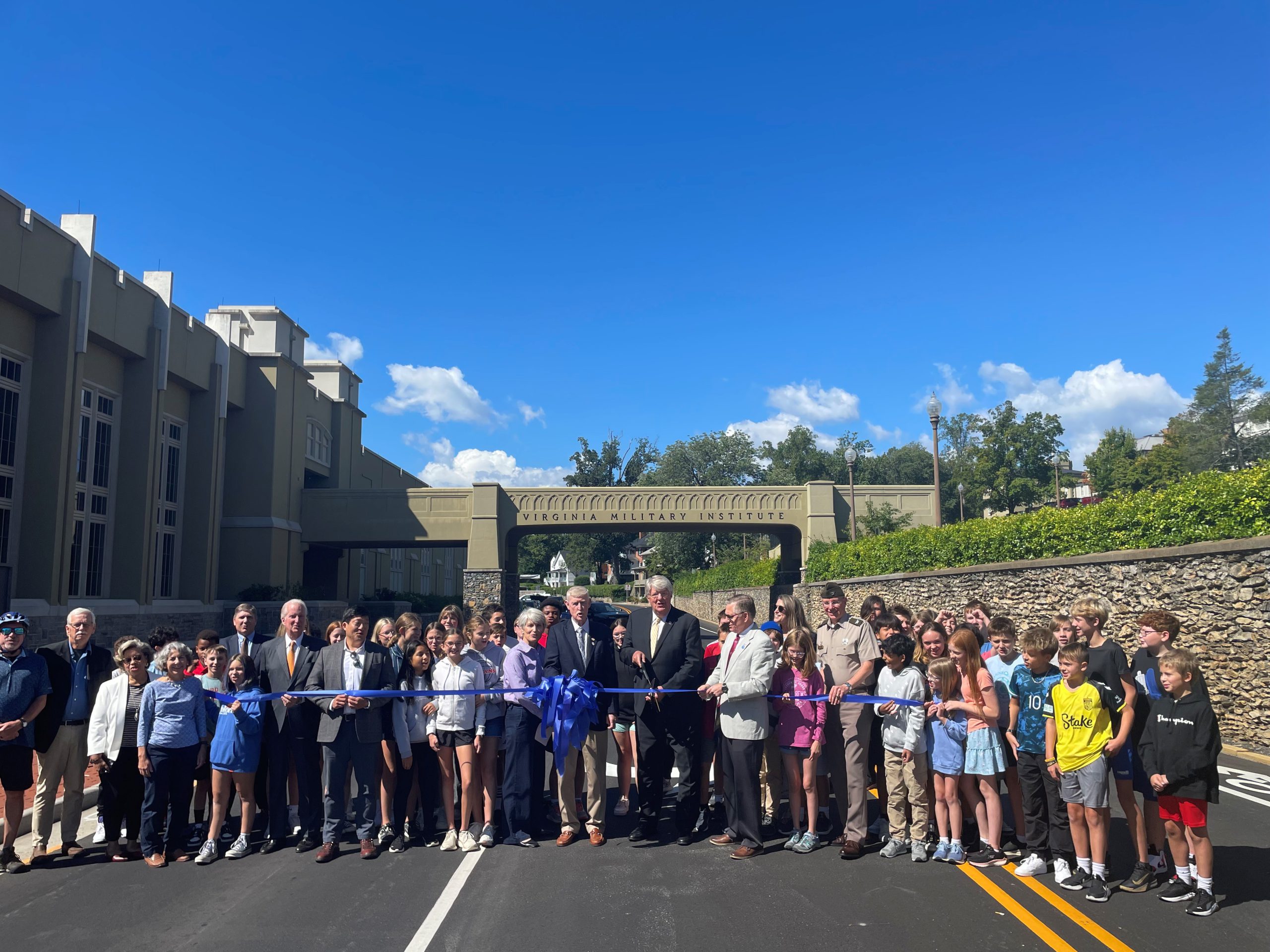
The City of Lexington celebrated the completion of a transformative streetscape project on August 27th with a ribbon cutting ceremony. Members of the Virginia House of Delegates, the Secretary of Transportation and the entire 7th grade class from nearby Lylburn Downing Middle School were the honored guests who cut the ribbon across the North Main Street streetscape project. CSPDC worked with City of Lexington and VMI in 2016 to submit a SMART SCALE application for the $4.1 million six-block project, which stretches along U.S. 11 Business from Massie Street to Hook Lane. The street reconfiguration widened the east-side sidewalk by five feet to meet Americans with Disabilities Act standards, and replaced on-street parking with a dedicated four-foot bike lane on the west side. The work also included replacing underground utilities and improving connections to the Chessie Trail and Washington and Lee University.
Recent Flood Mitigation Initiatives in the Region
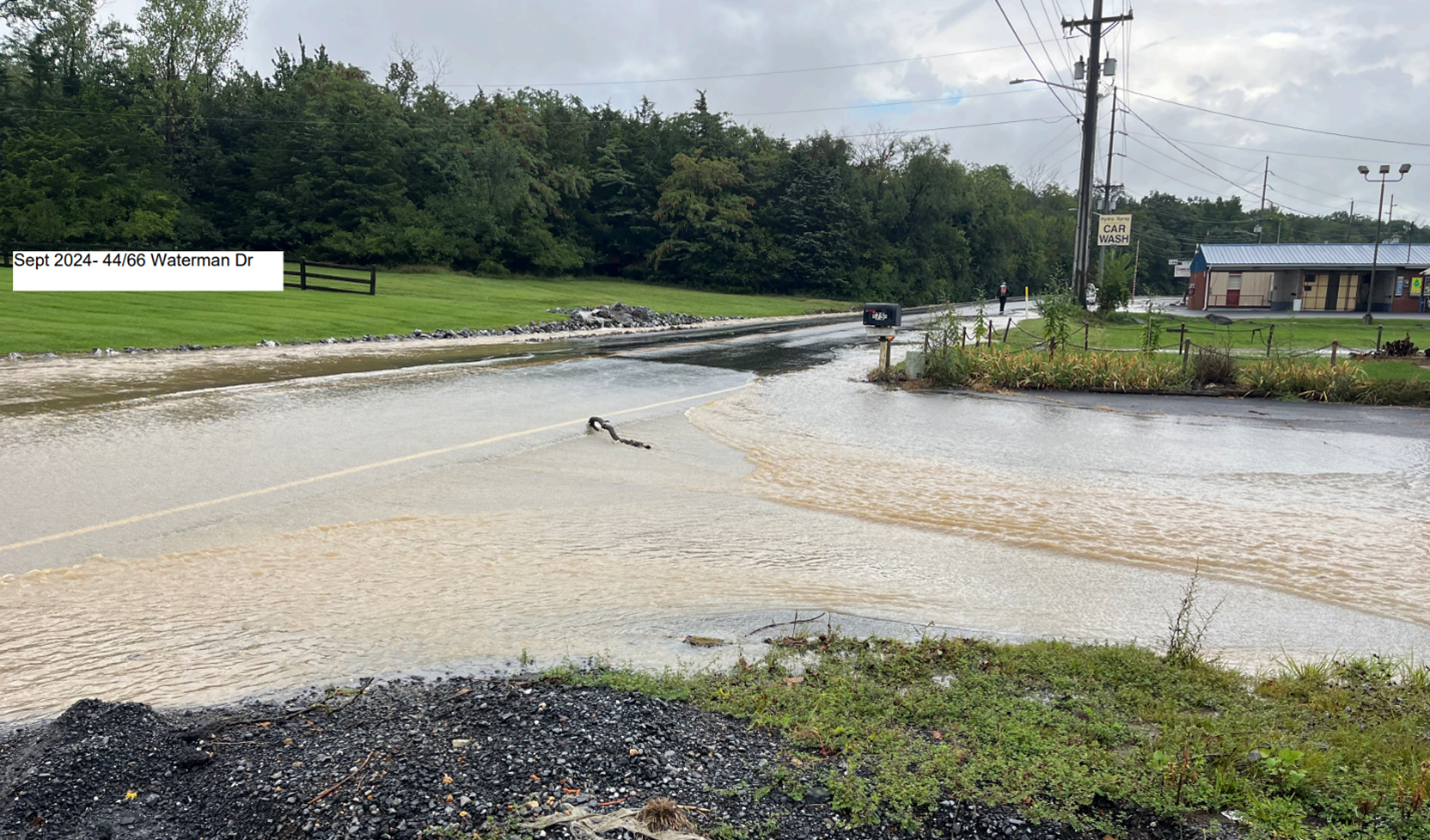
July proved to be a busy month for regional flood preparedness efforts, with $652,160 awarded in state funding to regional partners and multiple applications submitted for post-disaster federal funding.
On July 2nd, the Department of Conservation and Recreation (DCR) announced Round 5 awards for the Community Flood Preparedness Fund (CFPF), with three coming to our region:
- CSPDC received $270,000 to develop a Regional Flood Resilience Plan, with nearly all of our localities participating. This plan will identify and prioritize flood mitigation projects for implementation, ultimately streamlining future grant applications and unlocking additional funding opportunities.
- City of Waynesboro received $172,160 to update its Stormwater Capital Improvement Plan, building on previous drainage studies to identify and prioritize site-specific stormwater management projects. The plan will also support the city’s Chesapeake Bay water quality requirements.
- Town of Craigsville received $210,000 to develop a local resilience plan. Through this planning process, the town will gain a more detailed and technical study of flood occurrences and a list of future projects to reduce the impact of flooding.
Several localities in the region have also submitted applications for FEMA’s Hazard Mitigation Grant Program (HMGP) following Hurricane Helene, including:
- Bath and Highland Counties applied for funds to install a joint enhanced flood monitoring system with 14 real-time stream gauges connecting to West Virginia’s flood warning network, benefiting both local communities and neighboring areas.
- City of Harrisonburg proposed major upgrades to stormwater infrastructure along the Chicago Avenue and Waterman Drive corridor to address chronic flooding, building damage, and safety hazards for motorists and pedestrians.
Note: Round 6 of the Community Flood Preparedness Fund is expected to open this fall.
CSPDC Hosts MPO Roundtable in Fishersville
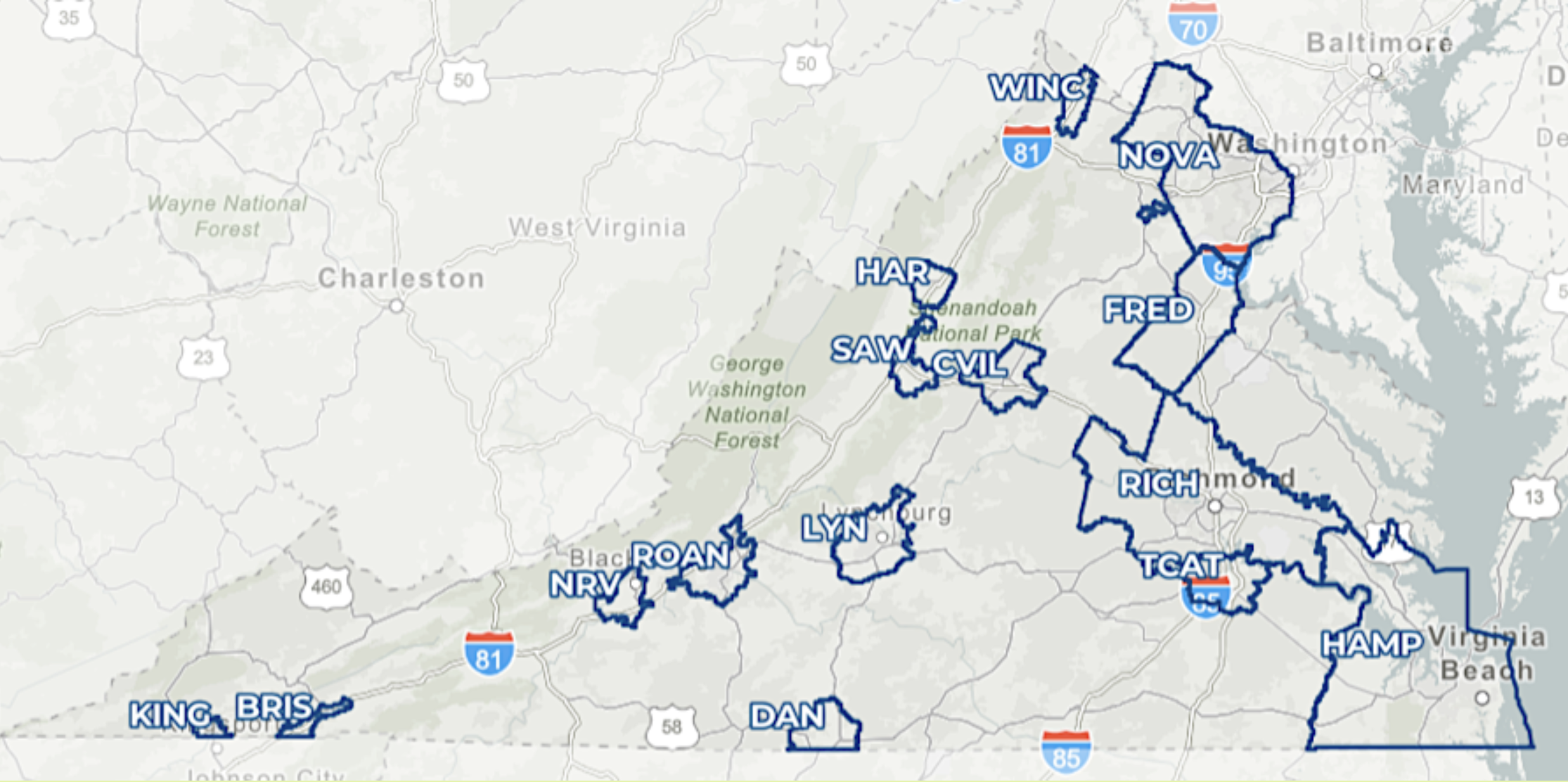
Transportation planning professionals from across Virginia gathered at the BRITE Transit Facility in Fishersville on August 27th for a collaborative roundtable discussion hosted by CSPDC’s transportation team. The three-hour event brought together staff from eight different Metropolitan Planning Organizations (MPOs) to tackle shared challenges and exchange valuable insights.
The afternoon began with a networking lunch that allowed participants to connect informally before diving into substantive discussions. The facilitated roundtable centered on meeting local transportation needs, along with persistent funding gaps that challenge project implementation across regions. The second discussion topic focused on examining the unique challenges faced by localities along the I-81 corridor where congestion and incidents on the interstate often force through traffic onto the local roadway networks. Participants shared experiences and strategies for advancing projects in these high-impact areas.
The event concluded with an open discussion where staff highlighted current projects, sought advice from peers, and exchanged ideas related to ongoing studies. This collaborative exchange was especially meaningful for the many participants who are new to their agencies or positions.
Future roundtables could explore different topics and rotate to various locations throughout the State, ensuring broader accessibility while maintaining the valuable in-person networking component that made this inaugural event so successful.
Senator Emmett Hanger Recognized for Outstanding Legislative Service
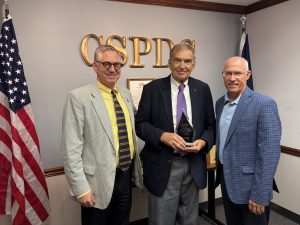
Pictured from left to right; Frank Friedman, CSPDC Chairman, Senator Emmett Hanger, David Blount, VAPDC Executive Director
The Virginia Association of Planning District Commissions (VAPDC) recently celebrated the far-reaching legislative impact of former Senator Emmett Hanger with the Lifetime Legislative Achievement Award at the August 18th Board of Commissioners meeting. David Blount, VAPDC Executive Director and longtime colleague of Senator Hanger presented the award, noting “VAPDC is excited to present this Lifetime Legislative Achievement Award to Senator Hanger. Having worked with Senator Hanger during his time in the Senate, I saw firsthand his passion and leadership on so many issues important to localities and regions.”
In 2018, Hanger was recognized as the nation’s 10th most productive state legislator by FiscalNote. Hanger earned the distinction with his cumulative legislative record since his election to the Senate in 1995 — not including eight years he served in the House of Delegates.
Our region is grateful for Senator Hanger’s many years of service in the General Assembly and we were honored to host him at his “home” PDC for the award presentation.
National Park Service Partners with Goshen to Transform Unused Land into Community Park
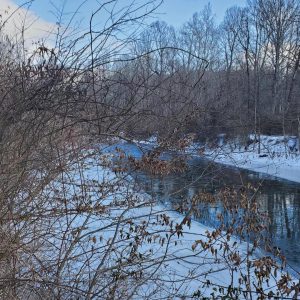
For over two decades, residents of the Town of Goshen have watched 42 acres of donated land sit empty, waiting for its promised purpose. Now, that wait is finally over.
In 2025, the NPS selected Goshen to receive technical assistance to support the planning and development of a new community park. The proposed park site is Town-owned, features scenic views of the surrounding Alleghany Mountains, and has direct access to the Calfpasture River.
The proposed new park offers benefits not only to Goshen residents, but also to neighboring communities. Mayor Thomas McCraw says that many Town and surrounding Rockbridge County residents must travel between 8 and 20 miles to reach the nearest community park. The new park would provide convenient, local access to outdoor recreation opportunities for seniors, families, and individuals in the area.
Preliminary concepts for the park include a large public green space, a music venue, and a network of walking trails and boardwalks. With guidance from the NPS, the Town will develop a clear framework to ensure the final design reflects the community’s highest priorities and most desired amenities.
Ann Cundy, Executive Director of the CSPDC states “The CSPDC is proud to support Goshen and the National Park Service on this transformative project. Recently, we helped the Town and County secure access to the Industrial Revitalization Fund (IRF) for the revitalization of the Stillwater Facility as well as secure Community Development Block Grant (CDBG) funding for a new community center in Goshen. I am inspired by the Town’s vision, persistence, and commitment. They have so much to be proud of.”
Nathan L. Hilbert from the NPS says “We are excited to dig into the project with Goshen to make the community park a reality. The NPS-RTCA program will assist in gathering community input and developing conceptual designs that will lead to future funding. I was really inspired by the history of Goshen, the dynamic park committee, and the goals laid out over the next year. The park is a unique opportunity for the community to create a space that builds connection, wellness, and just plain fun.”