Weigh In on the Future of the Shenandoah Valley Rail Trail Corridor — Survey Open Through May 13

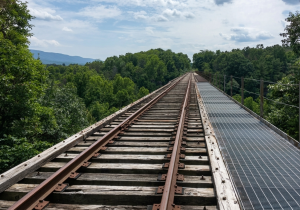
VDOT is now in Phase 3 of the Shenandoah Valley Rail with Trail Assessment — the final phase — and is gathering public input through a survey open through May 13. Respondents are asked to weigh in on whether the existing corridor should be converted to a trail (Rail-to-Trail), or should take a Rail-With-Trail approach.  We encourage everyone across the region to participate.

CSPDC and our member jurisdictions along the corridor support a trail for the Shenandoah Valley’s 49-mile corridor. As members of the Shenandoah Rail Trail Exploratory Partnership, we see a dedicated trail as an economic driver and lasting public investment for the communities along the corridor — one that supports economic development, transportation, tourism and outdoor recreation for the long term.

VDOT is holding three in-person public meetings along the corridor to present findings and take feedback:

  • Woodstock — Thursday, April 16, 5–7 p.m., Peter Muhlenberg Middle School
  • Front Royal — Thursday, April 23, 5–7 p.m., Warren County Government Center
  • Timberville — Tuesday, April 28, 5–7 p.m., Plains District Community Center

Take the survey at publicinput.com/svwt, or visit VDOT’s project page for full details.

Town of Goshen Awarded DOE Power CORE Grant for Solar-Powered Backup Generators

The Town of Goshen was awarded a grant through the Virginia Department of Energy’s Community-Oriented Resilient Energy (CORE) program to purchase and install two mobile solar-powered backup generators at its critical public facilities. The CSPDC assisted the Town in preparing and submitting the winning application.

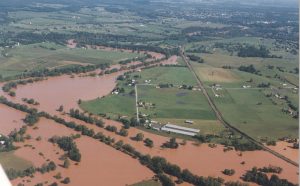
Like many rural communities, Goshen is susceptible to extended power outages caused by severe weather, and until now, none of its essential public facilities had a backup power source.

The $122,430 CORE grant will fund the purchase and installation of two mobile solar-powered generator trailers — each equipped with solar panel arrays and lithium battery storage capable of providing grid-independent power. The units will be housed at the Goshen Town Hall and Volunteer Fire Department, but they can be deployed wherever they are needed most during an emergency.

This project represents a significant leap forward for a community that has had limited emergency backup power capacity. Beyond keeping the lights on during outages, the solar generators will also give the Town access to FEMA and Virginia Department of Emergency Management funding streams that were previously unavailable because Goshen lacked a certified emergency shelter. The project is expected to be completed by the end of 2026.

The CORE grant is part of a broader revitalization effort in Goshen that has brought more than $2.35 million in investment into the heart of downtown.


Finding Funding for the Future: May Workshop Tackles Aviation and Affordable Housing

The funding landscape for local governments has never been more complex—or more consequential. On May 13th, VAPDC is bringing together local government staff, economic developers, state agency partners, and EDA/IDA board members in Staunton for the first installment of Finding Funding for the Future, a workshop series built around one practical goal: helping regional partners compete more successfully for the resources that move communities forward.

This session features two deep dives that couldn’t feel more timely.

Cleared for Takeoff will examine innovative funding mechanisms for aviation infrastructure, drawing on real-world case studies that show how communities have secured—and used—resources to modernize and expand regional air capacity. Whether you’re new to aviation finance or already working on a project, you’ll leave with a clearer picture of what’s possible and how to pursue it.

Unlocking the Capital Stack turns to one of the region’s most pressing needs: affordable housing. Who actually funds housing development? How do federal, state, local, and private sources layer together—and where do competitive proposals typically fall short? This session breaks down the capital stack and highlights what approaches are working on the ground.

The event takes place at Hotel 24 South in Staunton. CSPDC encourages our member jurisdictions and regional partners to attend—registration is open now at this link.

Hot Off the Press: New Socio-Economic Data Profiles

CSPDC supports regional economic development as a comprehensive resource for data about the region and our localities. Every other year, we publish easy-to-read data profiles covering people, jobs, schools, and other unique attributes for every locality and sub-region in the Central Shenandoah region. The profiles highlight the defining characteristics of a locality or sub-region, offering a quick but meaningful picture of what makes that area distinctive.

The 2025 Facts & Figures brochures are now available on the CSPDC website. Whether you’re researching workforce demographics, educational attainment, employment trends, or community assets, these updated profiles are your starting point for understanding the Central Shenandoah region. Visit the CSPDC website to download the latest edition for your locality.

Virginia Breeze Launches Tidewater Current, Connecting the Valley to the Coast

Getting from the Shenandoah Valley to Virginia Beach is about to get a lot easier. The Virginia Department of Rail and Public Transportation (DRPT) is launching the Tidewater Current, a new Virginia Breeze intercity bus route that will begin service on April 20. This is the first east-west transit service in the Virginia Breeze network, linking Virginia Beach and Hampton Roads with Richmond, Charlottesville, Staunton, and Harrisonburg along the I-64 corridor.

For Valley residents already familiar with the Virginia Breeze’s Valley Flyer, which connects Blacksburg to Washington, D.C., the Tidewater Current provides even more opportunities for connections in an entirely new direction. The route makes ten stops across the state:

  • Virginia Beach Convention Center
  • Norforlk – Military Highway Park & Ride
  • Newport News – Newport News Transportation Center
  • Williamsburg – Williamsburg Transportation Center
  • New Kent – Colonial Downs/Rosie’s Gaming Emporium
  • Richmond International Airport
  • Richmond Main Street Station
  • Charlottesville – Scott Stadium
  • Staunton – Crossing Way Park & Ride
  • Harrisonburg – Godwin Transit Center

“Expanding the Virginia Breeze intercity bus network is part of our commitment to providing more transportation choices for all Virginians,” said Mariia Zimmerman, director of DRPT. “The Tidewater Current creates an important east-west connection across the Commonwealth, helping people travel safely, affordably, and conveniently while supporting tourism and economic opportunity.”

Ticket pricing is destination based, and buses include roomy seating, a restroom, free Wi-Fi, and in-seat power outlets. All vehicles are wheelchair accessible and include luggage storage.

Tickets are available at virginiabreeze.drpt.virginia.gov.

CSPDC Title VI Plan Released for Public Comment

The CSPDC has released a Draft Title VI Plan for a 14-day public comment period, open through April 15, 2026.

The Title VI Plan describes how the CSPDC, and all it’s programs, ensure nondiscrimination on the basis of race, color, and national origin in their planning processes, public participation activities, consultant contracting, and distribution of federal funds, in compliance with Title VI of the Civil Rights Act of 1964.

You can review the draft CSPDC Title VI Plan here.

Previously, each MPO and BRITE Transit each maintained their own Title VI Plans. This 2026 update creates one plan for all CSPDC programs receiving federal funding with the exception of BRITE Transit. Due to the complexity of the Public Transit program, BRITE will continue to maintain its own plan which can be accessed on the BRITE website at www.britebus.org

Comments may be submitted via email to CSPDC@cspdc.org or via phone call to 540-885-5174. The plan will be considered for final adoption at the April 20, 2026 Board of Commissioners meeting.

CSPDC Joins Virginia PDCs on Capitol Hill

Earlier this month, CSPDC participated in the National Association of Development Organizations (NADO) Policy Conference, held March 8–11 in Washington, DC. The conference brought together development district professionals from across the country to engage with federal policymakers on issues critical to regional communities.

As part of the conference, Virginia’s PDC community turned out in force for a luncheon meeting with Congressional staff from both Senate offices and three House representatives’ offices. The conversation centered on three priorities directly relevant to the work of regional planning districts and the communities we serve.

First, increased funding for the Economic Development Administration (EDA) — a cornerstone federal partner for economic resilience and regional development investment. Second, support for the BASICS Act, the current vehicle for surface transportation reauthorization, which shapes the framework for how federal transportation dollars flow to states and regions. Third, the Road to Housing Act, which addresses the national housing affordability and supply challenges that are equally pressing here in the Shenandoah Valley.

We also recently shared our Senators’ call for congressionally directed spending requests, and encourage our member jurisdictions to communicate your project ideas to their staff, and call on the PDC for assistance with your requests.

CSPDC Selects New Contractor for BRITE Transit Operations

The Central Shenandoah Planning District Commission (CSPDC) is pleased to announce the selection of Resource Management Systems, Inc. (RMS) as the new contractor for turnkey operations and maintenance of the BRITE Transit system. RMS will assume operations beginning July 1, 2026, under a five-year base contract with options to extend for up to nine years total.

RMS is a Georgia-based transit service provider with over 30 years of experience delivering public transportation, paratransit, and non-emergency medical transportation services to communities across the country. They are no strangers to regions like ours — RMS currently provides transit services to numerous rural counties and planning commissions across Georgia, giving them a deep understanding of the unique challenges and opportunities that come with serving rural communities. The CSPDC is confident that RMS’s experience and commitment to accessible, reliable transportation make them an excellent fit for BRITE and the communities we serve.

As recipients of federal and state funding, the CSPDC is required to conduct a fully open and competitive procurement at the end of each contract term. That process was completed this year, resulting in the award to RMS.

This transition also marks the close of a long and valued chapter with our outgoing contractor, Virginia Regional Transit (VRT). VRT has operated the BRITE system since before the CSPDC assumed oversight of the program, and their dedication to this region has been immeasurable. The hard work, institutional knowledge, and care that VRT’s team has brought to BRITE over the years has shaped the system into what it is today, and we are deeply grateful for their partnership and service.

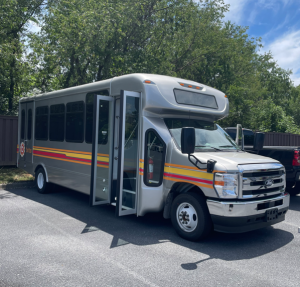
As the June 30, 2026 contract end date approaches, the CSPDC will work closely with both VRT and RMS to ensure a seamless transition. Our top priority is continuity of service — riders should experience no disruption on July 1st. In fact, the most noticeable change may simply be some fresh, new vehicles on the road.

Rockbridge Outdoors Begins 2026–2030 Strategic Planning Process

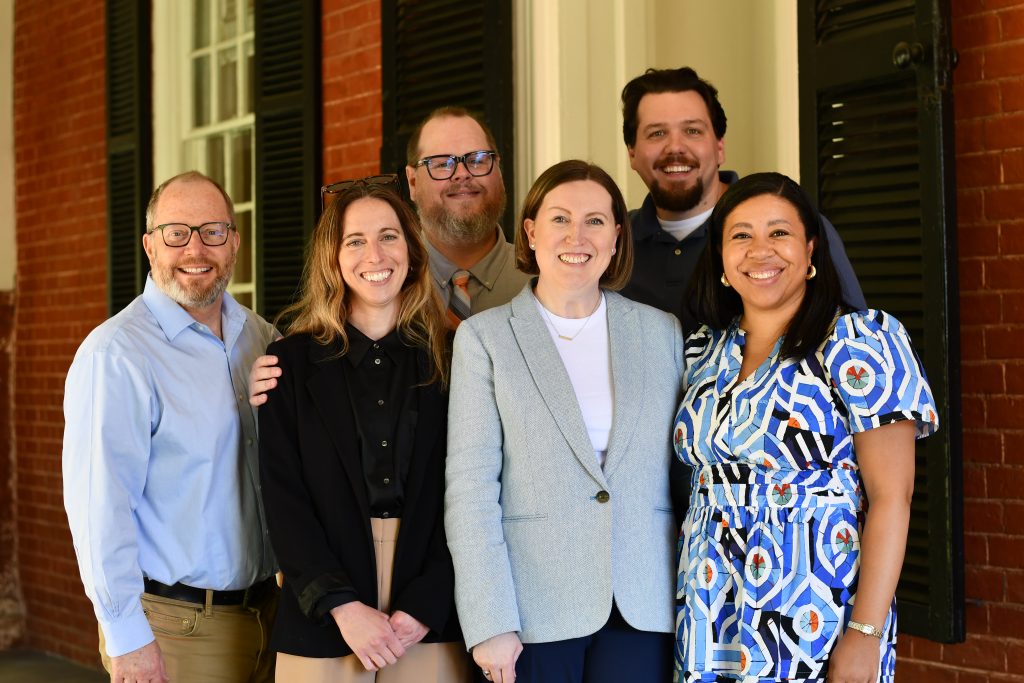
On March 12, 2026, graduate students in the Department of Urban and Environmental Planning at the University of Virginia School of Architecture facilitated an on-site workshop at the Virginia Horse Center to support the Rockbridge Outdoors Strategic Plan update for 2026–2030. This marks the initiative’s third strategic planning process since the Rockbridge Outdoors Area Partnership launched in 2018.

Rockbridge Outdoors’ mission is to collaboratively advance, create, and promote outdoor recreational opportunities throughout the Rockbridge area. The initiative is made up of approximately 50 organizations excited about supporting a regional vision for outdoor recreation in the Rockbridge area.

During the session, the students introduced two engagement tools designed to gather community input: an asset map highlighting outdoor recreation resources and a public survey to capture feedback from partnership members. Rockbridge Outdoors’ project teams–Community Wellness, Marketing, Trails, and Water Trails—also met and reviewed existing action plans and established updated priorities for the next four years.

The strategic planning team is continuing its information-gathering process through several focus groups composed of outdoor recreation stakeholders. The finalized strategic plan is expected to be completed and delivered by the end of April.