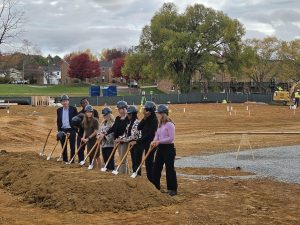
Enterprise Community Development held a groundbreaking ceremony on November 5, 2026, for 1030 Alston Court, a $36 million development that will bring 96 affordable rental homes to Waynesboro. It is the city’s first new affordable housing development in 15 years.
The 1030 Alston Court development will offer one-, two-, and three-bedroom apartments for households earning between 30% and 80% of the Area Median Income (AMI). Planned amenities include a community room, fitness center, and in-unit laundry, with energy-efficient construction designed to lower residents’ utility costs.
The development will reserve eight apartments for households with disabilities. Through an agreement with Valley Community Services Board, eligible households experiencing chronic homelessness, serious mental illness, or intellectual or developmental disabilities will receive referrals for housing, supportive services, and rental assistance.
The CSPDC contributed $560,000 to the project through Virginia Housing’s Regional Housing Development Program. This investment is part of a $1.2 million award supporting affordable housing development in Waynesboro and Harrisonburg, helping address the shortage of affordable rental options in the Shenandoah Valley that CSPDC’s Regional Housing Study identified.
Enterprise Community Development expects to complete construction by early 2028.
 The CSPDC has received a $50,000 Capacity Building Implementation Grant from Virginia Housing to develop an interactive regional data dashboard. The grant program supports organizations in enhancing their operations, processes, and resources to better serve their communities.