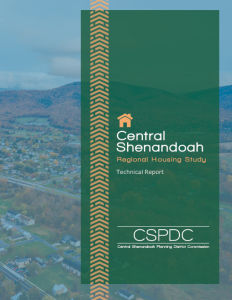
 The CSPDC recently published a housing study for its five-county region. The Regional Housing Study is the culmination of a major collaborative effort among CSPDC staff, local governments, housing stakeholders and consultants, and includes analysis of local and regional trends as well as solutions to the unique housing supply and affordability issues that its member localities are facing.
Funded by a grant from Virginia Housing, the study was developed by industry experts at Virginia Tech’s Center for Housing Research and HousingForward Virginia. The Regional Housing Study is a detailed analysis tailored to the region and its distinct housing markets. The study team worked closely with local staff and regional stakeholders and engaged in extensive outreach to develop solutions to market challenges that align with local goals and build on existing plans and interests.
CSPDC Chairman and Lexington Mayor Frank Friedman highlighted the critical need for accessible housing in the region and the role the housing study could play in supporting localities, stating, “Ensuring a steady supply of housing, including workforce, affordable, and market rate housing inventory remains a top priority for localities across our region. The release of the CSPDC Housing Study offers County, City, and Town staff reliable insights into housing challenges, viable solutions, and actionable steps toward implementation. This study will undoubtedly become a vital resource in our region’s ongoing efforts to ensure housing stability and continued growth.”
“The release of CSPDC’s Housing Study marks an important milestone for the Commonwealth’s largest planning district, providing localities with a strong foundation to address the region’s diverse housing needs,” said Virginia Housing Director of Strategic Housing Chris Thompson. “Virginia Housing is proud to support this important regional initiative.”
To read the study, visit CSPDC Housing Study | CSPDC Connects: Planning Together

 The CSPDC applied for eight grants to the Virginia Department of Rail and Public Transportation (DRPT). Applications submitted included: urban and rural capital cost of contracting, urban and rural operating, capital assistance, technical assistance, and commuter assistance operating and project assistance.
 The BRITE bus system celebrated Transit Equity Day on Tuesday, February 4. This day of action honors Civil Rights activist and icon, Rosa Parks, for her commitment to dismantling inequality and racism. Park’s refusal to move to the back of the bus and subsequent arrest, helped spark the Montgomery bus boycotts in 1955, which then contributed to the 1956 Supreme Court decision decreeing bus segregation unconstitutional. The legacy of these battles highlights the importance of equity in public transportation. Public transit is a vital vein and resource to communities, giving access to jobs, appointments, shopping centers, and social gatherings, and historically, this critical infrastructure has not been equally accessible or available to all. February 4 is Rosa Park’s birthday, and Transit Equity Day honors her legacy and contributions to Civil Rights and the equal treatment of all individuals. To commemorate, all BRITE routes, including Afton Express, were fare-free on February 4.