News
Ride BRITE Free to the Polls on Tuesday, November 3

FREE BRITE Rides for Election Day
BRITE Bus is offering free rides on all routes on Election Day, Tuesday, November 3. BRITE serves polling places across Staunton, Waynesboro, and Augusta County, so if you plan to vote in person, we can help you get there.
Election Day Basics
- Polls are open from 6:00 a.m. to 7:00 p.m. Anyone in line by 7:00 p.m. will be allowed to vote.
- You must vote at your assigned polling place. Look yours up on the Virginia Department of Elections Citizen Portal at vote.elections.virginia.gov.
- Election Day is a Tuesday, so all BRITE weekday routes will run, and every ride is free.
- Check the last bus before you go. The Waynesboro Circulator runs 6:30 a.m. to 6:22 p.m., and the West/North Loop runs 6:30 a.m. to 7:30 p.m.
Staunton Polling Places
- Ward 1, Third Presbyterian Church (1313 Barterbrook Rd): 250 Connector, Staunton Mall stop
- Ward 2, Christ United Methodist Church (1512 Churchville Ave): West/North Loop, Churchville Ave / A St stop
- Ward 3, Gypsy Hill Park Gym (229 116th Regimental Rd): Downtown Trolley (Gypsy Hill Park stop) or West/North Loop (Gypsy Hill House stop)
- Ward 4, Seventh-day Adventist Church (1000 N. Coalter St): West/North Loop, N. Coalter St
- Ward 5, Memorial Baptist Church (224 Taylor St): West/North Loop, Terry St / N. Coalter St stop
Waynesboro Polling Places
All four Waynesboro polling places are served by the Waynesboro Circulator.
- Ward A, Wenonah Elementary School (125 N. Bayard Ave): E. Main St / N. Commerce Ave stop
- Ward B, Waynesboro Public Library (600 S. Wayne Ave): Library/YMCA stop
- Ward C, Kate Collins Middle School (1625 Ivy St): Mountain View Apartments stop
- Ward D, Westminster Presbyterian Church (1904 Mt. Vernon St): 13th Street stop
Augusta County Polling Places Near BRITE Service
- Verona, Augusta County Government Center (18 Government Center Ln): BRCC Shuttle, Government Center stop
- Fishersville, Wilson Elementary School (127 Woodrow Wilson Ave): 250 Connector, WWRC stop
- Wilson, Valley Vocational Technical Center (49 Hornet Rd): 250 Connector, WWRC stop
- Fort Defiance and Rolla, Edward G. Clymore Elementary School (184 Fort Defiance Rd): BRCC Shuttle, Route 11 / Fort Defiance Rd stop
- Stuarts Draft Elementary and Mount Vernon, Stuarts Draft Elementary School (63 School Blvd): Stuarts Draft Link
Plan Your Trip
Find your polling place, check your route, and let BRITE get you there. Questions about routes or schedules? Call BRITE Customer Service at (540) 943-9302 or visit britebus.org and use the trip planner!
CSPDC Featured in NADO’s “EDDs in Action” Video Series
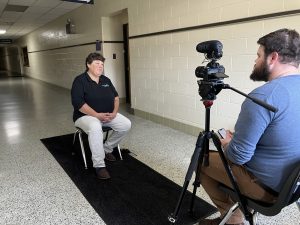
The Central Shenandoah region is in the national spotlight. The National Association of Development Organizations (NADO) recently released a new installment of its EDDs in Action video series featuring the CSPDC and the work we do alongside local partners to grow the regional economy.
EDDs, or Economic Development Districts, are regional organizations designated by the U.S. Economic Development Administration (EDA) to plan for and invest in long-term economic growth. NADO’s video series travels the country to show what that work looks like on the ground. This spring, a NADO film crew visited the Valley as part of a focus on Appalachian communities in western Virginia and West Virginia.
The result is a nine-minute look at how the CSPDC helps turn local visions into funded, completed projects. As CSPDC Executive Director Ann Cundy puts it in the video, “We pride ourselves on knowing what each of our jurisdictions needs.” That planning knowledge helps us match partners with the right funding opportunities.
Watch the video on NADO’s website
The video highlights three projects the CSPDC helped fund and implement, Shenandoah Valley Airport’s Aviation Technology Park, SVCAL’s Award-Winning Go2Work Program, and the Virginia Innovation Accelerator in Buena Vista.
Partnerships That Build a Stronger Region
We are grateful to NADO for telling this story, and to our partners at Shenandoah Valley Airport, SVCAL, and The Advancement Foundation for sharing their work. Together, these investments in site readiness, workforce training, and business development are creating new opportunities across the Central Shenandoah Valley.
Watch the full EDDs in Action video and learn more about the CSPDC’s economic development work at cspdc.org.
Ann Cundy Receives 2026 Gordon N. Dixon Award for Regional Leadership
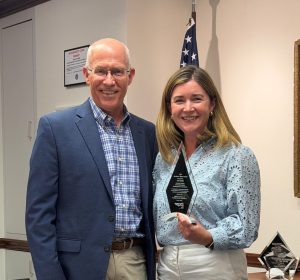
CSPDC Executive Director Ann W. Cundy has received the 2026 Gordon N. Dixon Award from the Virginia Association of Planning District Commissions (VAPDC). The award was presented at the Commission’s August 17 meeting. It recognizes an executive director or commissioner whose leadership has advanced regional cooperation across Virginia.
The VAPDC created the award to honor Gordon N. Dixon, who spent 16 years as executive director of the New River Valley and Fifth Planning District Commissions. Virginia’s 21 Planning District Commissions (PDCs) and Regional Commissions help local governments plan together for needs that cross local boundaries, such as transportation, housing, and economic development.
Ann has served as Executive Director since 2024. Before that, she spent more than 11 years with CSPDC, including as Director of Transportation, where she managed the agency’s transportation and transit programs. She also served with the Thomas Jefferson Planning District Commission. In his nomination, CSPDC Director of Finance Donnie Kern said Ann “has demonstrated the type of visionary, collaborative, and service-oriented leadership that strengthens not only the organization, but also the broader mission of Planning District Commissions throughout Virginia.”
A hallmark of Ann’s leadership is her hands-on approach. She works directly with elected officials, administrators, planners, and economic development professionals in our 21 member localities, from the Town of Monterey to the City of Harrisonburg, so that every community has a voice and access to regional resources. Director of Transportation Paula Melester noted that Ann’s vision “has energized our team and deepened our ability to serve our partners.”
Please join us in congratulating Ann. To learn more about the VAPDC and its work across the Commonwealth, visit vapdc.org.
Afton Express Ridership Up 25% Amid Rising Fuel Prices
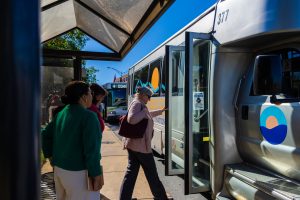
Afton Express ridership increased 25% between March and August 2026 compared to the same period in 2025. During the same time period, the average price of gas in the region was roughly 30% higher than the year before.
Rising fuel costs are likely one factor behind the ridership growth. Others include expanded marketing efforts in FY26, a schedule realignment that took effect in December 2025, and organic ridership growth.
Afton Express riders see significant savings by taking the bus instead of driving. The average rider saved about $750 on gas alone from March through August of this year.
Visit aftonexpress.org to learn more about the Afton Express.
CSPDC Launches Rural Health Transformation Initiative
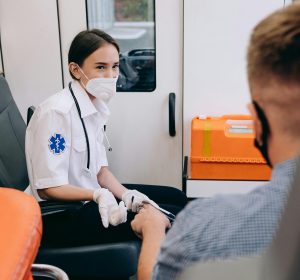
The Central Shenandoah Planning District Commission (CSPDC) has been awarded $11.8 million to help bring health care closer to the places where rural residents live and work. The CSPDC will partner with the Virginia Department of Medical Assistance Services (DMAS) to carry out the Mobile and Hybrid Care initiative, part of the Rural Health Transformation Program’s Connected Care, Closer to Home effort.
The funding will be awarded to local health care providers through a competitive application process. Projects may include mobile care units, telehealth kiosks, electronic consultations between providers, and other creative ways of delivering care in rural communities. Grants will cover the start-up costs of mobile and technology-enabled care to support primary care, behavioral health and substance use treatment, dental care, vision care, screenings, and diagnostics.
Why It Matters
For many rural Virginians, a routine checkup can mean a long drive, time off from work, or a missed day of school. Those barriers often lead people to put off preventive care until a small problem becomes a serious one. The Mobile and Hybrid Care initiative aims to change that by taking services directly into communities, improving health outcomes for rural residents with care that fits into everyday life.
A Regional Partnership
Rural health needs don’t stop at county lines, so the program is a collaboration among three regional commissions. The CSPDC will lead the effort and administer the funds. It will work alongside the New River Valley Regional Commission and the Roanoke Valley-Alleghany Regional Commission to identify strong projects throughout their combined service areas.
How Providers Can Apply
The CSPDC will soon advertise a Request for Applications (RFA) to identify the strongest projects to fund. Applications will be reviewed competitively, with attention to community impact, the quality of the proposed approach, and the project’s ability to reach rural residents. Health care providers, clinics, health systems, and other organizations interested in bringing care closer to rural communities are encouraged to start planning now. Watch for the RFA announcement on the CSPDC website at https://cspdc.org/.
This project is supported by the Centers for Medicare & Medicaid Services (CMS) of the U.S. Department of Health and Human Services (HHS) as part of a financial assistance award totaling $189,544,888.14 with 100 percent funded by CMS/HHS. The contents are those of the author(s) and do not necessarily represent the official views of, nor an endorsement, by CMS/HHS, or the U.S. Government.