$1 Million Investment Brings Affordable Housing Solutions to Central Shenandoah Region

The Central Shenandoah Planning District Commission (CSPDC) has received $1.2 million from Virginia Housing’s Regional Housing Development Program (RHDP) to support the development of new affordable housing units in Waynesboro and Harrisonburg.

The grant award builds on Virginia Housing’s successful 2022 Planning District Commission Housing Development Program. The RHDP creates replicable models of affordable and workforce housing to meet growing demand across the Commonwealth.

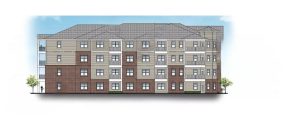
The CSPDC’s recent Regional Housing Study identified a shortage of affordable rental options in the Staunton-Augusta-Waynesboro and Harrisonburg Metropolitan Statistical Areas. In response, the CSPDC is supporting two projects that will bring 176 affordable rental units to the region. These homes will serve residents earning between 30% and 80% of the Area Median Income (AMI), with a focus on supporting workers in service and support roles.

The projects include the 1030 Alston Court development in Waynesboro, led by Enterprise Community Development, Inc., a nonprofit and one of the largest affordable housing developers in the Mid-Atlantic region. The second project is BJS Harrisonburg Family I in Harrisonburg, developed by the Beverly J. Searles Foundation, Inc., a Georgia-based nonprofit that has built more than 800 affordable housing units nationwide. Both projects will receive $560,000 in Regional Housing Development Funds.

These developments represent a significant step forward in addressing the region’s affordable housing shortage and will provide much-needed rental options for working families in the Central Shenandoah region.
Federal Grant Strengthens Regional Flood Preparedness Efforts

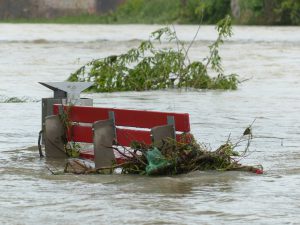
The CSPDC has received a $270,000 grant from Virginia Department of Conservation and Recreation’s (DCR) Community Flood Preparedness Fund (CFPF) program to develop a Regional Flood Resilience Plan. The CFPF program funds planning and implementation projects that reduce the impact of flooding throughout the State. The Resilience Plan will align with the strategies identified in the CSPDC’s on-going Hazard Mitigation Plan update, which identifies flooding as the region’s top natural disaster vulnerability.

The CSPDC Regional Flood Resilience Plan will identify each community’s flooding and stormwater needs, and develop a list of prioritized implementation projects with cost estimates. Additionally, upon completion of the Resilience Plan, localities will be able to apply for DCR CFPF implementation funding to construct flood mitigation projects. Currently, there are no localities in the CSPDC region that maintain a Resilience Plan, which is a prerequisite for DCR CFPF implementation funding eligibility.

The CSPDC is finalizing a contract with a consultant to guide the planning process, and staff will provide localities with the next steps after the contract is finalized. Contact Zach Beard, Program Manager, at zach@cspdc.org, or Rachel Kinzer, Regional Planner, at rachel@cspdc.org with questions. Staff anticipate the planning process to begin in August 2025.

JMU Graduate Student Joins CSPDC Team for Summer Planning Experience

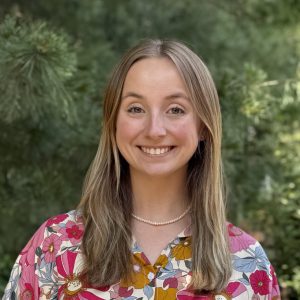
Kayla Dixon, Graduate Assistant – Transit

The Central Shenandoah Planning District Commission is pleased to announce that Kayla Dixon, a Master of Public Administration student at James Madison University, has joined our team as a summer intern. This partnership with JMU’s Public Administration program brings fresh perspectives and academic expertise to support our ongoing regional planning initiatives.

Kayla previously served as an intern in the City of Harrisonburg’s City Manager’s Office, where she collaborated with diverse community stakeholders and helped develop equitable engagement strategies for local government officials.

During her CSPDC summer internship, Kayla will focus on an engagement project with CSPDC’s transit team, applying her strong background in community relations and stakeholder engagement.

Looking ahead to fall 2025, Kayla will transition to a graduate assistantship role, expanding her work beyond transit to include projects with CSPDC’s community development and transportation teams. This extended partnership will allow her to contribute to a broader range of regional planning initiatives while gaining hands-on experience in public administration.

“Kayla’s academic background, combined with her practical experience in local government and community engagement, makes her an ideal addition to our team,” noted Paula Melester, Director of Transportation. “We look forward to the fresh insights she’ll bring to our transit and community development work.”

The internship and graduate assistantship represent CSPDC’s ongoing commitment to fostering the next generation of public administration professionals while enhancing our capacity to serve the Central Shenandoah region.

Boost for Afton Express Service as CSPDC Secures State Transit Funding

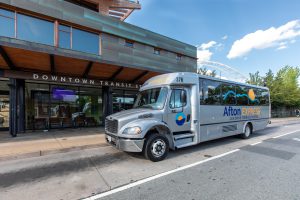
The CSPDC has been awarded funding through Virginia’s Transit Ridership Incentive Program (TRIP) to help reduce local match requirements for the Afton Express bus service. The grant, awarded under TRIP’s regional connectivity category, will significantly lower the financial burden on local funding partners over the next five years.

TRIP is administered by the Virginia Department of Rail and Public Transit (DRPT) and provides funding to transit agencies and governing bodies to create more accessible, safe, and regionally significant transit networks. The program supports four project categories: zero and reduced fare programs, regional connectivity, public safety, and passenger amenities and facilities.

The regional connectivity component specifically targets improved regional transportation and congestion mitigation in urban areas with populations exceeding 100,000. The Afton Express service, which connects Staunton, Waynesboro, and Augusta County to Charlottesville and Albemarle County, aligns perfectly with these goals by providing essential transit connections for residents and workers.

The TRIP funding follows a step-down structure designed to encourage local sustainability. In fiscal year 2025, DRPT covered 80% of eligible costs, with the state portion decreasing to 60% in fiscal year 2026. This graduated approach allows local partners time to plan for long-term funding while immediately reducing the financial strain on participating jurisdictions. The funding will help ensure the continued operation of this vital transportation link while communities work toward sustainable long-term financing solutions.

Growing Ridership

As ridership on the Afton Express has grown significantly since its 2021 launch, the CSPDC is working with consultants to revise the bus schedule to better serve the expanding ridership base. The schedule optimization aims to make full use of all three vehicles while better aligning trip times with the start and end times of shifts at major employers along the route. With trips around the most popular times now approaching capacity, the team is exploring ways to increase frequency and reduce time gaps between trips to accommodate continued growth.

The comprehensive schedule review focuses on ensuring that as ridership increases, everyone who wants to ride the Afton Express will have a seat. A draft of the new schedule will be released to the public for comment later this summer, with hopes of implementing the revised schedule this fall. This proactive approach to service planning demonstrates the CSPDC’s commitment to meeting the evolving transportation needs of the region’s workforce and residents.

Elkton’s Downtown Gets Greener with New Street Tree Initiative

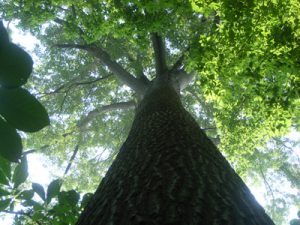
The Town of Elkton’s western entrance corridor is getting a dramatic transformation this fall, thanks to a $10,000 CSPDC Watershed Wellness grant that will plant 37 strategically placed street trees along the gateway to downtown. The trees aren’t just for aesthetics, they will also capture stormwater runoff while creating an inviting tree-lined entrance that welcomes visitors and residents alike.

The project represents the kind of win-win solution that makes nature-based stormwater management so compelling: addressing real flooding and water quality issues while simultaneously beautifying a community’s front door. By fall, Elkton’s entrance corridor will become a leafy gateway that manages rain where it falls and creates a memorable first impression of downtown Elkton.

The CSPDC’s Watershed Wellness grant program makes these transformations possible by providing 100% no-match funding for nature-based stormwater projects, backed by the Department of Environmental Quality (DEQ). With nearly $100,000 available for stormwater planning and implementation projects across the region in 2025, communities can tackle environmental challenges without straining local budgets. The program accepts applications on a rolling basis until funds are exhausted, making it accessible for communities ready to put innovative stormwater solutions to work.

Learn more at: https://cspdc.org/programs-services/wip-iii/


Transportation Study Reveals Solutions for High-Traffic Corridor

In June 2025, the Harrisonburg-Rockingham MPO completed a comprehensive study of the Port Republic Road / Peach Grove Avenue / Neff Avenue intersection and surrounding corridor in the City of Harrisonburg. Working with VHB Engineering the study team conducted operational and safety analysis, traffic data collection, and future condition modeling for five major intersections within the study area. The study team worked with City staff, VDOT, James Madison University, Rockingham County, and community stakeholders to evaluate existing constraints and develop improvement alternatives.

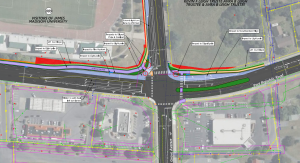
The study’s preferred alternative proposes extending the eastbound turn on Devon Lane to provide dedicated left-turn capacity, expanding the southbound Port Republic Road approach to accommodate dual left turns onto Neff Avenue, and constructing a 10-foot shared-use path along the east side of Port Republic Road. The study’s recommendations include shared-use paths on Neff Avenue and Peach Grove Avenue, safe pedestrian crossings at key locations, and low-cost safety countermeasures including high-visibility signal backplates.

VHB Engineering developed preliminary engineering drawings for the Preferred Alternative to meet VDOT Smart Scale application requirements, with implementation strategies tailored to coordinate with ongoing development in the corridor. Since the study’s completion, CSPDC staff have worked with regional partners to identify funding opportunities to construct the improvements.

Review the final study report here: https://hrvampo.org/wp-content/uploads/2025/06/CSPDC-Port-Republic-Rd-Peach-Grove-Ave-Neff-Ave-Small-Area-Study-FINAL-Report-06.25.2025-Scaled2x.pdf

From Broadband to Water to Transit: CSPDC Staff Dive Deep into Regional Challenges

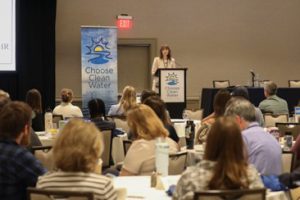
Picture Credits: Choose Clean Water Coalition, photo by Carolyn Millard, Leeanna Duong, and Drew Robinson

Bridging the Digital Divide

Regional Planner Philippe Bone participated in Broadband Together 2025: Universal Broadband and Beyond in Richmond (May 15th). This event, hosted by the Broadband Association of Virginia, the Virginia Department of Housing & Community Development (DHCD), and the Virginia Municipal League, focused on achieving universal broadband access while exploring emerging technologies like telemedicine, artificial intelligence, and cybersecurity enhancement. Currently, CSPDC administers three DHCD-funded Virginia Telecommunication Initiative (VATI) projects—one serving Bath and Highland counties, and two in Rockbridge County—collectively aiming to deliver internet service to over 3,700 locations throughout the Central Shenandoah region.

Tackling Water Quality Challenges

The annual Choose Clean Water Conference in Harrisonburg (May 19-21) drew more than 280 participants, including two CSPDC staff members, Zach Beard and Rachel Kinzer.  Together, they explored this year’s theme: “Hills and Valleys: Our Journey for Clean Water.” The three-day event brought together environmental professionals, advocates, and community leaders to collaborate on innovative solutions for watershed restoration and Chesapeake Bay protection. Conference sessions tackled pressing contemporary issues, from the growing presence of data centers in Virginia and their potential impacts on water quality and quantity, to PFAS contamination in biosolids and effective community engagement strategies around flooding, historic preservation and environmental restoration.

Exploring Transit Innovation

CSPDC’s transit team, Danielle Gannon, Paula Melester, and Devon Thompson, attended the Virginia Transit Association’s (VTA) Annual Conference & Expo on May 28-29 in Richmond. This gathering brought together transit professionals from across the Commonwealth alongside policy makers, consultants, and vendors to examine both current realities and future possibilities in public transportation. Sessions focused heavily on funding challenges while also exploring creative topics like incorporating art into transit systems, workforce development needs, cybersecurity, and land use planning tools that help communities better connect residents to essential services.

Connecting the Dots

While these three conferences addressed distinct sectors, common themes emerged around funding challenges, the intersection of technology with traditional infrastructure, and the importance of community engagement. Whether discussing water quality impacts from data centers, cybersecurity concerns in transit systems, or the role of broadband in enabling telemedicine, each event highlighted how modern infrastructure challenges require integrated thinking and comprehensive solutions.

Building Resilience One Community at a Time: CSPDC’s Comprehensive Hazard Mitigation Approach

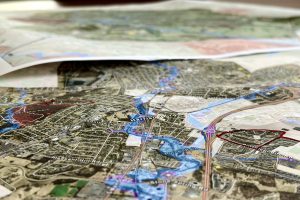
Throughout May and June, the CSPDC Community Development Team of Jeremy Crute, Rachel Kinzer, Elizabeth Goodloe and Philippe Bone, embarked on a region-wide listening tour, sitting down face-to-face with representatives from all 21 member localities to discuss their communities’ experiences with natural disasters and explore tailored solutions. These strategic planning meetings represent a cornerstone of the Central Shenandoah Hazard Mitigation Plan (CSHMP) development process—but they’re also something more: an opportunity to understand each community’s unique story.

From the mountain communities of Bath and Highland counties to the valley towns along major corridors, the team discovered that no two localities face identical challenges. Some communities grapple with recurring flood patterns along historic creek beds, while others contend with winter weather impacts on remote mountain roads. Each conversation revealed local knowledge that can’t be captured in data alone, such as which neighborhoods have elderly residents who might need additional support during power outages, or which local businesses serve as community gathering points during emergencies.

This ground-up approach to hazard mitigation planning goes beyond simply identifying risks by meeting with each locality individually to develop actionable mitigation strategies that reflect real-world conditions and community priorities. The goal is to emphasize proactive community protection and identify vulnerabilities so solutions can be implemented that make communities more resilient. The conversations happening now will shape how our region weathers future challenges—literally and figuratively—creating a plan that strengthens the fabric of regional preparedness.

The completed Central Shenandoah Hazard Mitigation Plan is expected to be adopted in early 2026. Once approved by FEMA, it will ensure all member localities remain eligible for federal disaster assistance while providing a roadmap for long-term community resilience.