



Welcome to the CSPDC
The Central Shenandoah Planning District Commission (CSPDC) represents and serves the local governments of Augusta, Bath, Highland, Rockbridge, and Rockingham counties and the cities of Buena Vista, Harrisonburg, Lexington, Staunton and Waynesboro as well as the 11 towns within the Central Shenandoah region.
The CSPDC works with its member jurisdictions, communities, and agencies to provide high-quality planning, technical assistance, and facilitation of services that address local, regional, and state needs in an innovative, timely, and cooperative manner. Covering everything from land use planning, transportation, water and waste-water utilities, natural resource management, affordable housing, economic and community development, hazard mitigation, agritourism, to human services, the CSPDC is an invaluable asset to the quality of life in the Central Shenandoah Valley. For more information about the CSPDC, click here.
Central Shenandoah Planning District Commission
112 MacTanly Place
Staunton, VA 24401
Phone: 540-885-5174
Fax: 540-885-2687
View Our Regional Collaboration Video
Latest News
Afton Express Ridership Up 25% Amid Rising Fuel Prices
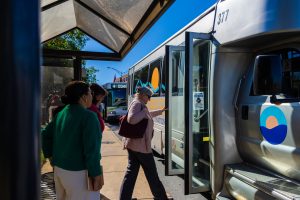
Afton Express ridership increased 25% between March and August 2026 compared to the same period in 2025. During the same time period, the average price of gas in the region was roughly 30% higher than the year before.
Rising fuel costs are likely one factor behind the ridership growth. Others include expanded marketing efforts in FY26, a schedule realignment that took effect in December 2025, and organic ridership growth.
Afton Express riders see significant savings by taking the bus instead of driving. The average rider saved about $750 on gas alone from March through August of this year.
Visit aftonexpress.org to learn more about the Afton Express.
CSPDC Launches Rural Health Transformation Initiative
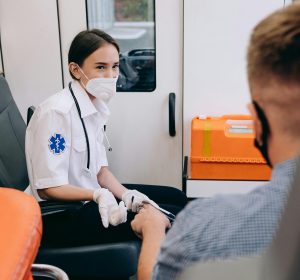
The Central Shenandoah Planning District Commission (CSPDC) has been awarded $11.8 million to help bring health care closer to the places where rural residents live and work. The CSPDC will partner with the Virginia Department of Medical Assistance Services (DMAS) to carry out the Mobile and Hybrid Care initiative, part of the Rural Health Transformation Program’s Connected Care, Closer to Home effort.
The funding will be awarded to local health care providers through a competitive application process. Projects may include mobile care units, telehealth kiosks, electronic consultations between providers, and other creative ways of delivering care in rural communities. Grants will cover the start-up costs of mobile and technology-enabled care to support primary care, behavioral health and substance use treatment, dental care, vision care, screenings, and diagnostics.
Why It Matters
For many rural Virginians, a routine checkup can mean a long drive, time off from work, or a missed day of school. Those barriers often lead people to put off preventive care until a small problem becomes a serious one. The Mobile and Hybrid Care initiative aims to change that by taking services directly into communities, improving health outcomes for rural residents with care that fits into everyday life.
A Regional Partnership
Rural health needs don’t stop at county lines, so the program is a collaboration among three regional commissions. The CSPDC will lead the effort and administer the funds. It will work alongside the New River Valley Regional Commission and the Roanoke Valley-Alleghany Regional Commission to identify strong projects throughout their combined service areas.
How Providers Can Apply
The CSPDC will soon advertise a Request for Applications (RFA) to identify the strongest projects to fund. Applications will be reviewed competitively, with attention to community impact, the quality of the proposed approach, and the project’s ability to reach rural residents. Health care providers, clinics, health systems, and other organizations interested in bringing care closer to rural communities are encouraged to start planning now. Watch for the RFA announcement on the CSPDC website at https://cspdc.org/.
This project is supported by the Centers for Medicare & Medicaid Services (CMS) of the U.S. Department of Health and Human Services (HHS) as part of a financial assistance award totaling $189,544,888.14 with 100 percent funded by CMS/HHS. The contents are those of the author(s) and do not necessarily represent the official views of, nor an endorsement, by CMS/HHS, or the U.S. Government.
Devon Thompson Appointed to Transit Association Board
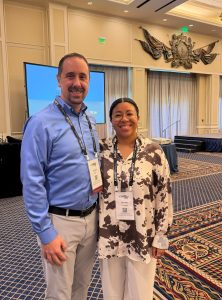
Senior Transit Planner Devon Thompson has been appointed to an at-large seat on the board of the Community Transportation Association of Virginia (CTAV), the statewide association representing Virginia’s small public and community transit providers. Board members serve as volunteers.
Devon brought her 13 years of transit planning experience to the Virginia Department of Transportation (VDOT) Local Programs Workshop in Roanoke on September 22. She joined staff from the Virginia Department of Rail and Public Transportation (DRPT) on a panel about how state agencies and transit agencies can work together so that transit infrastructure is incorporated into larger transportation projects from the start.
When a road is widened or an intersection redesigned, a bus stop, shelter, or safe crossing is far easier to include during design than to add afterward. Devon does this work for BRITE every day, coordinating with local planners and the Staunton-Augusta-Waynesboro Metropolitan Planning Organization (SAWMPO) to deliver new bus shelters across the service area, focused on busy stops at the Augusta County Government Center and the Fishersville and Waynesboro public libraries.
During her two-year term, Devon will help plan CTAV’s statewide events, including the Roadeo, Young Professionals in Transit trainings, and the Annual Conference & Expo. Her service keeps BRITE and the Central Shenandoah region at the table where Virginia’s transit priorities take shape.


