



Welcome to the CSPDC
The Central Shenandoah Planning District Commission (CSPDC) represents and serves the local governments of Augusta, Bath, Highland, Rockbridge, and Rockingham counties and the cities of Buena Vista, Harrisonburg, Lexington, Staunton and Waynesboro as well as the 11 towns within the Central Shenandoah region.
The CSPDC works with its member jurisdictions, communities, and agencies to provide high-quality planning, technical assistance, and facilitation of services that address local, regional, and state needs in an innovative, timely, and cooperative manner. Covering everything from land use planning, transportation, water and waste-water utilities, natural resource management, affordable housing, economic and community development, hazard mitigation, agritourism, to human services, the CSPDC is an invaluable asset to the quality of life in the Central Shenandoah Valley. For more information about the CSPDC, click here.
Central Shenandoah Planning District Commission
112 MacTanly Place
Staunton, VA 24401
Phone: 540-885-5174
Fax: 540-885-2687
View Our Regional Collaboration Video
Latest News
Afton Express Sees Ridership Surge
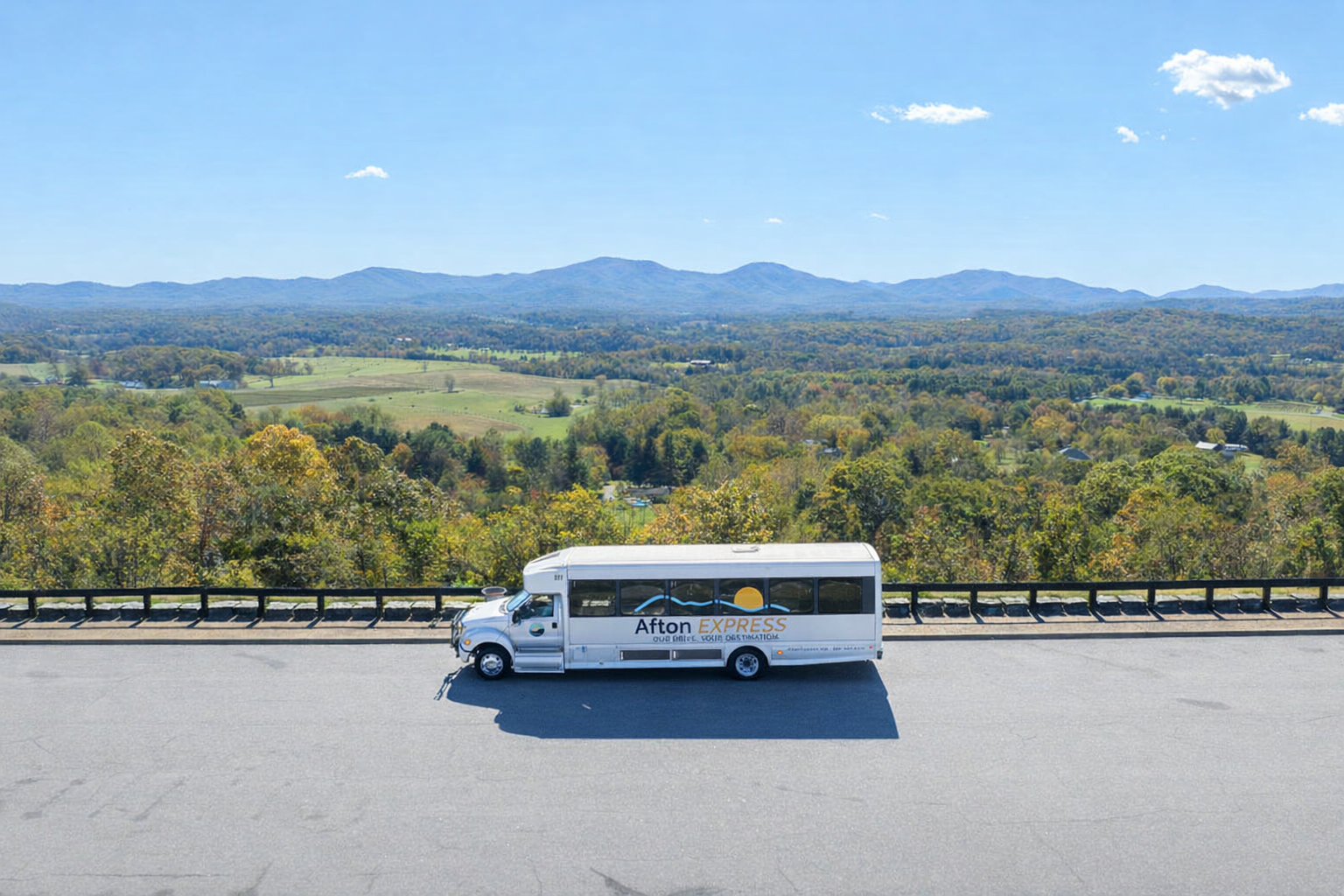
The Afton Express recorded a 38% increase in ridership this February compared to February 2025, a milestone for BRITE Transit’s commuter route connecting the Central Shenandoah Valley to Charlottesville and Albemarle County.
The increase follows a marketing campaign that launched in fall 2025 and runs through the end of June, 2026. The Virginia Department of Rail and Public Transportation (DRPT) provided grant funds for the campaign which includes television and streaming commercials, interviews, and digital display advertising. Staff also engaged a professional photographer and a graphic designer to develop polished, consistent promotional materials for the route.
Afton Express also implemented a new schedule on December 1, 2025 to better align departure and arrival times with employer schedules and rider requests — another driver of the ridership surge. For more information on Afton Express, see our 2025 Annual Report.
Weigh In on the Future of the Shenandoah Valley Rail Trail Corridor — Survey Open Through May 13
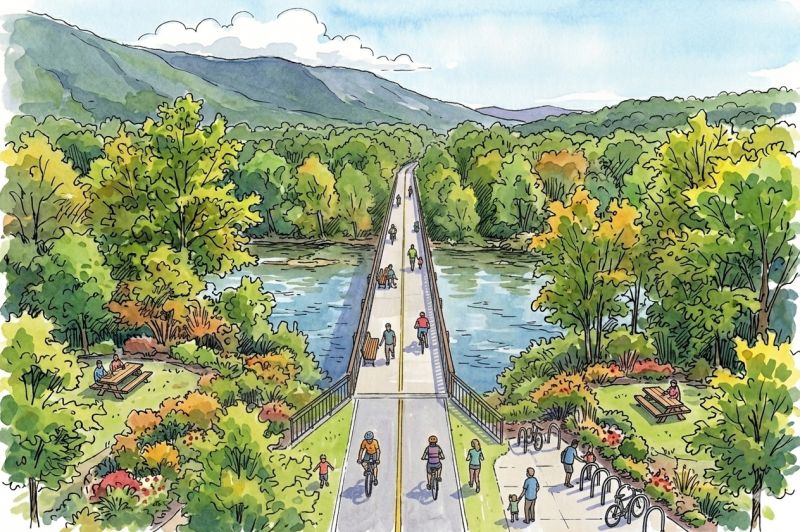
VDOT is now in Phase 3 of the Shenandoah Valley Rail with Trail Assessment — the final phase — and is gathering public input through a survey open through May 13. Respondents are asked to weigh in on whether the existing corridor should be converted to a trail (Rail-to-Trail), or should take a Rail-With-Trail approach. We encourage everyone across the region to participate.
CSPDC and our member jurisdictions along the corridor support a trail for the Shenandoah Valley’s 49-mile corridor. As members of the Shenandoah Rail Trail Exploratory Partnership, we see a dedicated trail as an economic driver and lasting public investment for the communities along the corridor — one that supports economic development, transportation, tourism and outdoor recreation for the long term.
VDOT is holding three in-person public meetings along the corridor to present findings and take feedback:
- Woodstock — Thursday, April 16, 5–7 p.m., Peter Muhlenberg Middle School
- Front Royal — Thursday, April 23, 5–7 p.m., Warren County Government Center
- Timberville — Tuesday, April 28, 5–7 p.m., Plains District Community Center
Take the survey at publicinput.com/svwt, or visit VDOT’s project page for full details.
Town of Goshen Awarded DOE Power CORE Grant for Solar-Powered Backup Generators
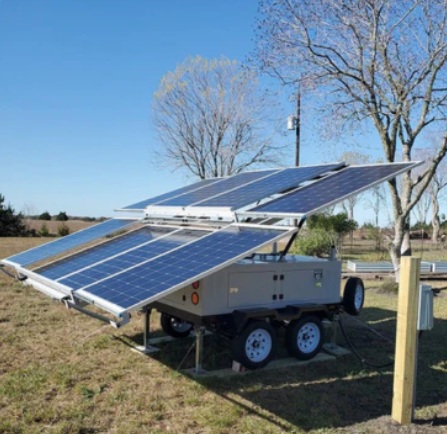
The Town of Goshen was awarded a grant through the Virginia Department of Energy’s Community-Oriented Resilient Energy (CORE) program to purchase and install two mobile solar-powered backup generators at its critical public facilities. The CSPDC assisted the Town in preparing and submitting the winning application.
Like many rural communities, Goshen is susceptible to extended power outages caused by severe weather, and until now, none of its essential public facilities had a backup power source.
The $122,430 CORE grant will fund the purchase and installation of two mobile solar-powered generator trailers — each equipped with solar panel arrays and lithium battery storage capable of providing grid-independent power. The units will be housed at the Goshen Town Hall and Volunteer Fire Department, but they can be deployed wherever they are needed most during an emergency.
This project represents a significant leap forward for a community that has had limited emergency backup power capacity. Beyond keeping the lights on during outages, the solar generators will also give the Town access to FEMA and Virginia Department of Emergency Management funding streams that were previously unavailable because Goshen lacked a certified emergency shelter. The project is expected to be completed by the end of 2026.
The CORE grant is part of a broader revitalization effort in Goshen that has brought more than $2.35 million in investment into the heart of downtown.


