Boost for Afton Express Service as CSPDC Secures State Transit Funding

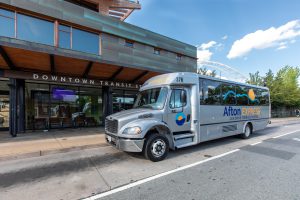
The CSPDC has been awarded funding through Virginia’s Transit Ridership Incentive Program (TRIP) to help reduce local match requirements for the Afton Express bus service. The grant, awarded under TRIP’s regional connectivity category, will significantly lower the financial burden on local funding partners over the next five years.

TRIP is administered by the Virginia Department of Rail and Public Transit (DRPT) and provides funding to transit agencies and governing bodies to create more accessible, safe, and regionally significant transit networks. The program supports four project categories: zero and reduced fare programs, regional connectivity, public safety, and passenger amenities and facilities.

The regional connectivity component specifically targets improved regional transportation and congestion mitigation in urban areas with populations exceeding 100,000. The Afton Express service, which connects Staunton, Waynesboro, and Augusta County to Charlottesville and Albemarle County, aligns perfectly with these goals by providing essential transit connections for residents and workers.

The TRIP funding follows a step-down structure designed to encourage local sustainability. In fiscal year 2025, DRPT covered 80% of eligible costs, with the state portion decreasing to 60% in fiscal year 2026. This graduated approach allows local partners time to plan for long-term funding while immediately reducing the financial strain on participating jurisdictions. The funding will help ensure the continued operation of this vital transportation link while communities work toward sustainable long-term financing solutions.

Growing Ridership

As ridership on the Afton Express has grown significantly since its 2021 launch, the CSPDC is working with consultants to revise the bus schedule to better serve the expanding ridership base. The schedule optimization aims to make full use of all three vehicles while better aligning trip times with the start and end times of shifts at major employers along the route. With trips around the most popular times now approaching capacity, the team is exploring ways to increase frequency and reduce time gaps between trips to accommodate continued growth.

The comprehensive schedule review focuses on ensuring that as ridership increases, everyone who wants to ride the Afton Express will have a seat. A draft of the new schedule will be released to the public for comment later this summer, with hopes of implementing the revised schedule this fall. This proactive approach to service planning demonstrates the CSPDC’s commitment to meeting the evolving transportation needs of the region’s workforce and residents.
Elkton’s Downtown Gets Greener with New Street Tree Initiative

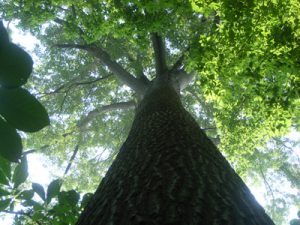
The Town of Elkton’s western entrance corridor is getting a dramatic transformation this fall, thanks to a $10,000 CSPDC Watershed Wellness grant that will plant 37 strategically placed street trees along the gateway to downtown. The trees aren’t just for aesthetics, they will also capture stormwater runoff while creating an inviting tree-lined entrance that welcomes visitors and residents alike.

The project represents the kind of win-win solution that makes nature-based stormwater management so compelling: addressing real flooding and water quality issues while simultaneously beautifying a community’s front door. By fall, Elkton’s entrance corridor will become a leafy gateway that manages rain where it falls and creates a memorable first impression of downtown Elkton.

The CSPDC’s Watershed Wellness grant program makes these transformations possible by providing 100% no-match funding for nature-based stormwater projects, backed by the Department of Environmental Quality (DEQ). With nearly $100,000 available for stormwater planning and implementation projects across the region in 2025, communities can tackle environmental challenges without straining local budgets. The program accepts applications on a rolling basis until funds are exhausted, making it accessible for communities ready to put innovative stormwater solutions to work.

Learn more at: https://cspdc.org/programs-services/wip-iii/


Transportation Study Reveals Solutions for High-Traffic Corridor

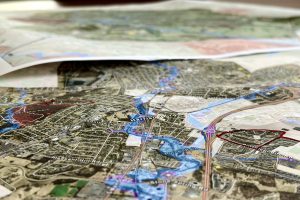
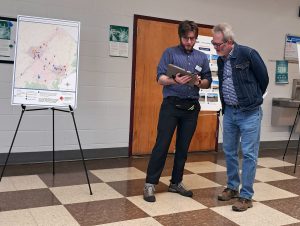
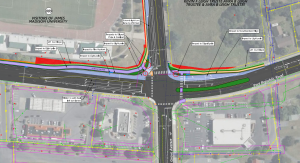
In June 2025, the Harrisonburg-Rockingham MPO completed a comprehensive study of the Port Republic Road / Peach Grove Avenue / Neff Avenue intersection and surrounding corridor in the City of Harrisonburg. Working with VHB Engineering the study team conducted operational and safety analysis, traffic data collection, and future condition modeling for five major intersections within the study area. The study team worked with City staff, VDOT, James Madison University, Rockingham County, and community stakeholders to evaluate existing constraints and develop improvement alternatives.

The study’s preferred alternative proposes extending the eastbound turn on Devon Lane to provide dedicated left-turn capacity, expanding the southbound Port Republic Road approach to accommodate dual left turns onto Neff Avenue, and constructing a 10-foot shared-use path along the east side of Port Republic Road. The study’s recommendations include shared-use paths on Neff Avenue and Peach Grove Avenue, safe pedestrian crossings at key locations, and low-cost safety countermeasures including high-visibility signal backplates.

VHB Engineering developed preliminary engineering drawings for the Preferred Alternative to meet VDOT Smart Scale application requirements, with implementation strategies tailored to coordinate with ongoing development in the corridor. Since the study’s completion, CSPDC staff have worked with regional partners to identify funding opportunities to construct the improvements.

Review the final study report here: https://hrvampo.org/wp-content/uploads/2025/06/CSPDC-Port-Republic-Rd-Peach-Grove-Ave-Neff-Ave-Small-Area-Study-FINAL-Report-06.25.2025-Scaled2x.pdf

From Broadband to Water to Transit: CSPDC Staff Dive Deep into Regional Challenges

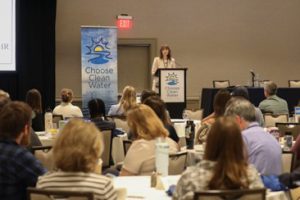
Picture Credits: Choose Clean Water Coalition, photo by Carolyn Millard, Leeanna Duong, and Drew Robinson

Bridging the Digital Divide

Regional Planner Philippe Bone participated in Broadband Together 2025: Universal Broadband and Beyond in Richmond (May 15th). This event, hosted by the Broadband Association of Virginia, the Virginia Department of Housing & Community Development (DHCD), and the Virginia Municipal League, focused on achieving universal broadband access while exploring emerging technologies like telemedicine, artificial intelligence, and cybersecurity enhancement. Currently, CSPDC administers three DHCD-funded Virginia Telecommunication Initiative (VATI) projects—one serving Bath and Highland counties, and two in Rockbridge County—collectively aiming to deliver internet service to over 3,700 locations throughout the Central Shenandoah region.

Tackling Water Quality Challenges

The annual Choose Clean Water Conference in Harrisonburg (May 19-21) drew more than 280 participants, including two CSPDC staff members, Zach Beard and Rachel Kinzer.  Together, they explored this year’s theme: “Hills and Valleys: Our Journey for Clean Water.” The three-day event brought together environmental professionals, advocates, and community leaders to collaborate on innovative solutions for watershed restoration and Chesapeake Bay protection. Conference sessions tackled pressing contemporary issues, from the growing presence of data centers in Virginia and their potential impacts on water quality and quantity, to PFAS contamination in biosolids and effective community engagement strategies around flooding, historic preservation and environmental restoration.

Exploring Transit Innovation

CSPDC’s transit team, Danielle Gannon, Paula Melester, and Devon Thompson, attended the Virginia Transit Association’s (VTA) Annual Conference & Expo on May 28-29 in Richmond. This gathering brought together transit professionals from across the Commonwealth alongside policy makers, consultants, and vendors to examine both current realities and future possibilities in public transportation. Sessions focused heavily on funding challenges while also exploring creative topics like incorporating art into transit systems, workforce development needs, cybersecurity, and land use planning tools that help communities better connect residents to essential services.

Connecting the Dots

While these three conferences addressed distinct sectors, common themes emerged around funding challenges, the intersection of technology with traditional infrastructure, and the importance of community engagement. Whether discussing water quality impacts from data centers, cybersecurity concerns in transit systems, or the role of broadband in enabling telemedicine, each event highlighted how modern infrastructure challenges require integrated thinking and comprehensive solutions.

Building Resilience One Community at a Time: CSPDC’s Comprehensive Hazard Mitigation Approach

Throughout May and June, the CSPDC Community Development Team of Jeremy Crute, Rachel Kinzer, Elizabeth Goodloe and Philippe Bone, embarked on a region-wide listening tour, sitting down face-to-face with representatives from all 21 member localities to discuss their communities’ experiences with natural disasters and explore tailored solutions. These strategic planning meetings represent a cornerstone of the Central Shenandoah Hazard Mitigation Plan (CSHMP) development process—but they’re also something more: an opportunity to understand each community’s unique story.

From the mountain communities of Bath and Highland counties to the valley towns along major corridors, the team discovered that no two localities face identical challenges. Some communities grapple with recurring flood patterns along historic creek beds, while others contend with winter weather impacts on remote mountain roads. Each conversation revealed local knowledge that can’t be captured in data alone, such as which neighborhoods have elderly residents who might need additional support during power outages, or which local businesses serve as community gathering points during emergencies.

This ground-up approach to hazard mitigation planning goes beyond simply identifying risks by meeting with each locality individually to develop actionable mitigation strategies that reflect real-world conditions and community priorities. The goal is to emphasize proactive community protection and identify vulnerabilities so solutions can be implemented that make communities more resilient. The conversations happening now will shape how our region weathers future challenges—literally and figuratively—creating a plan that strengthens the fabric of regional preparedness.

The completed Central Shenandoah Hazard Mitigation Plan is expected to be adopted in early 2026. Once approved by FEMA, it will ensure all member localities remain eligible for federal disaster assistance while providing a roadmap for long-term community resilience.


Former Executive Director Receives Public Service Award

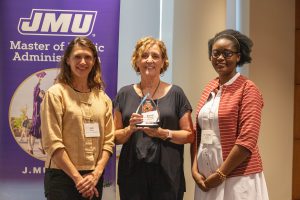
Photo by Michelle Krone

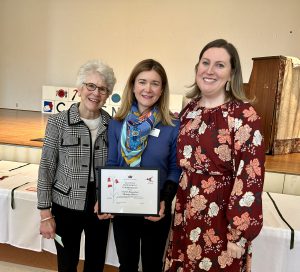
Recently-retired Executive Director Bonnie Riedesel received the JMU Career Achievement in Public Service Award on April 22, 2025. JMU has recognized individuals across the Shenandoah Valley of Virginia region for their excellence in public service as part of the national Public Service Recognition Week. Honorees are nominated and selected by their peers and colleagues, facilitated by the JMU MPA program and are recognized at the annual Public Service Reception on the JMU campus.

Nominated by our partner organization the Alliance for the Shenandoah Valley, Bonnie was recognized for her 29 years of service to the region, the many new and innovative programs that she launched, and her spirit of collaboration. We congratulate Bonnie on this much-deserved award!

CSPDC and DEQ Kick Off Regional Water Supply Plans

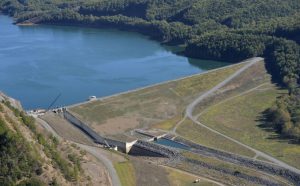
On April 1, 2025, CSPDC staff, representatives from the Department of Environmental Quality (DEQ), and regional stakeholders gathered to kick-off the Shenandoah River 1 and Upper James River 1 Water Supply Plans. These plans are being developed in accordance with the Local and Regional Water Supply Planning Regulation (9VAC25-780), which requires their completion by 2029.

The Shenandoah River 1 regional planning unit includes Augusta and Rockingham counties; the cities of Harrisonburg, Staunton, and Waynesboro; and the towns of Bridgewater, Broadway, Craigsville, Dayton, Elkton, Grottoes, Mount Crawford, and Timberville.

The Upper James River 1 planning unit includes Bath, Highland, and Rockbridge counties; the cities of Buena Vista and Lexington; and the towns of Glasgow, Goshen, and Monterey.

To support initial planning efforts, the CSPDC has received approximately $20,000 in grant funding across the two regional units. This will help with early-stage activities such as developing a project management plan and timeline, conducting initial data collection, and local data requests.

The water supply planning process is a long-term, collaborative effort involving input from state agencies, regional entities, and local governments. The CSPDC will lead coordination of all planning efforts for both water supply plans, facilitating communication among DEQ, localities, and public service authorities, and overseeing data collection and plan development.

CSPDC Applies for Increased SPARC Allocation for First-Time Homebuyers’ Program

In April 2025, the CPSDC applied for its third allocation of funds through Virginia Housing’s Sponsoring Partnerships & Revitalizing Communities (SPARC) Program. Building on the success of its previous efforts, the CSPDC is seeking $4.5 million in SPARC funding to support first-time, eligible homebuyers across the Central Shenandoah region.

The CSPDC first became a SPARC sponsor in 2023, with an initial $1.7 million allocation. Due to strong demand for more SPARC funds, the CSPDC asked for an allocation of $3 million the following year, which was fully expended by the end of the first quarter of 2025. Through this funding, the CSPDC helped a total of eleven homebuyers achieve homeownership, seven in Rockingham County, three in the City of Harrisonburg, and one in the City of Waynesboro. Each program participant completed Virginia Housing’s Homebuyer Education course and received housing counseling services from Southeast Rural Community Assistance Project Inc. (SERCAP).

The SPARC Program offers a reduced mortgage interest rate (a 1% adjustment below Virginia Housing’s prevailing home loan rates), potentially saving homebuyers thousands of dollars over the life of their loan. SPARC funds can also be used to complement the CSPDC’s existing First Time Homebuyer Program, which provides down payment and closing cost assistance to income-qualified homebuyers at 80% AMI or below. For more information about the CSPDC’s First-time homebuyer’s program, please contact Philippe Bone at 540-885-5174 or by email here.

Lewis Street Transit Hub Recognized with National Civic Improvement Award

The Central Shenandoah Planning District Commission (CSPDC) is proud to announce that the Lewis Street Transit Hub has been honored with a Civic Improvement Commendation from the Garden Club of America. The award recognizes “outstanding efforts which enhance, protect, or restore the local environment and improve the community.”

The Augusta Garden Club, a local chapter affiliated with the Garden Club of Virginia, nominated the project for this national honor. The club praised the thoughtful transformation of the site, particularly highlighting the use of native plants as an added value to the project.

In the nomination letter, the club’s Awards Chairman Marie Thomas shared, “This project has it all – improvement of an eyesore, proper use of governmental grants, and sensitivity to the needs of the neighborhood and travelers. This area was formerly an abandoned space that the Planning Commission has incorporated into a lovely green space to allow beauty and peace for citizens who use public transportation.”

The CSPDC team, represented by Ann Cundy and Paula Melester, accepted the award on April 9, 2025 during the Augusta Garden Club’s April meeting. In reflecting on the achievement, Ms. Melester emphasized that the award is a celebration of the entire project team — from funding partners, to the landscape architects and engineers at Kimley-Horn and Associates, the City of Staunton, and the contractors who brought the vision to life.

Thanks to the collaborative efforts of everyone involved, the Lewis Street Transit Hub now proudly carries the title of an “Award-Winning” site, enhancing the community and providing a welcoming space for transit users.

Congratulations to all who contributed to this transformational project!

The Lewis Street Transit Hub Rehabilitation was funded through a Federal Transit Administration Bus and Bus Facilities (5339) grant matched with state funding provided by the Virginia Department of Rail and Public Transportation (DRPT). You can read more about the project here.